Free photo ID check · Mon–Sat 8am–6pm · All Warrington postcodes
[phone] Free photo ID check

How to identify Japanese knotweed

Japanese knotweed changes through the year. Here is what to look for in each season, and the plants it is most often mistaken for.

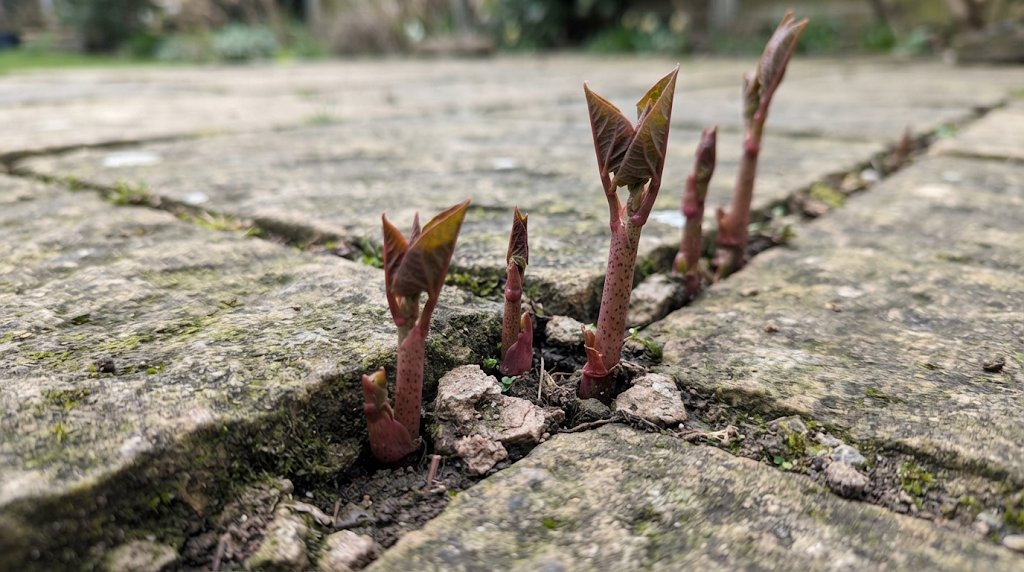
Red Japanese knotweed shoots in spring
Spring: red shoots
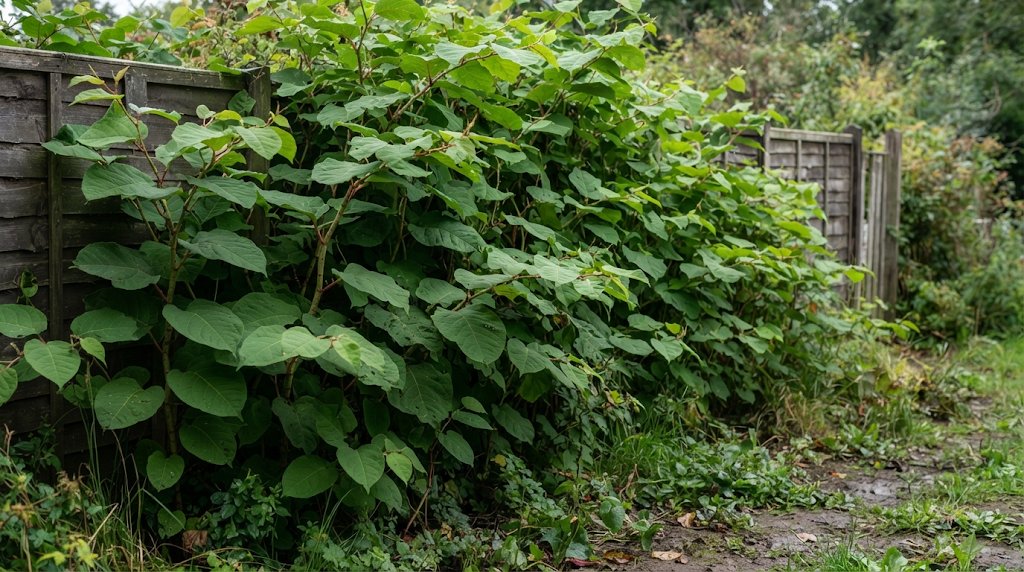
Japanese knotweed in summer leaf
Summer: full leaf
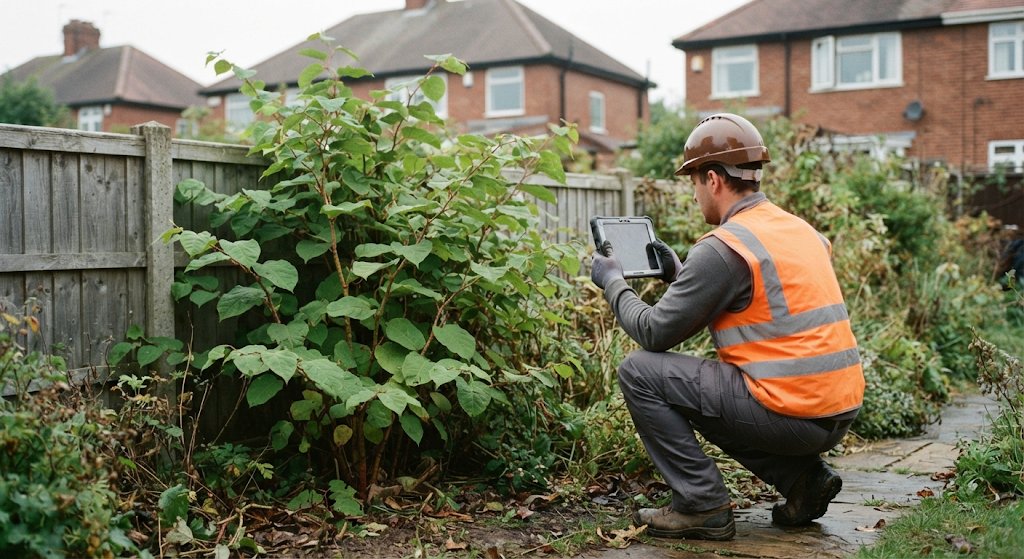
Surveyor checking a knotweed stand
Not sure? Send a photo

Spring

From April, red or purple shoots appear, looking a little like asparagus. The leaves are rolled back and dark red at first, turning green as they open. Shoots can grow several centimetres a day.

Summer

By midsummer the plant can reach two to three metres. The stems are hollow and bamboo-like with purple speckles, growing in a zig-zag from one node to the next. Leaves are shield or heart-shaped with a flat base and alternate along the stem.

Late summer and autumn

From August, creamy-white flowers hang in tassels from where the leaves join the stem. In autumn the leaves yellow and fall.

Winter

The canes die back to brown, hollow, brittle stems that often stay standing. The rhizome underground is alive and will send up new shoots in spring.

Look-alikes

Bindweed twines around other plants and has arrow-shaped leaves. Dogwood has a woody stem and leaves with curved veins. Russian vine climbs. Houttuynia is much smaller and smells of orange when crushed. If you are not sure, send us a photo.

The short answers

In brief

What does Japanese knotweed look like?
Hollow, bamboo-like stems with purple or red speckles, growing in a zig-zag from node to node. Leaves are shield or heart-shaped with a flat base, up to about 14cm long. Plants reach 2 to 3 metres in summer.
What does knotweed look like in spring?
Red or purple asparagus-like shoots with rolled-back leaves appear from April. They can grow several centimetres a day.
What does knotweed look like in winter?
The leaves drop and the canes die back to brown, hollow, brittle stems that often stay standing through winter. The rhizome underground is still alive.
What is commonly mistaken for Japanese knotweed?
Bindweed, Russian vine, dogwood, lilac, houttuynia and Himalayan balsam are frequent look-alikes. Bindweed twines around other plants; knotweed stands on its own stems.
Found it?

What happens next

Call [phone]